Is AI Taking Jobs or Handing Out Promotions?
7 July 2026 · 5 min read
AI is deleting tasks much faster than it is deleting jobs, and the work left behind sits higher up the ladder. That is the argument IBM engineer Jeff Crume makes in a recent video [1]: handle AI well and the whole team effectively gets a promotion.
What is the pyramid to diamond shift?
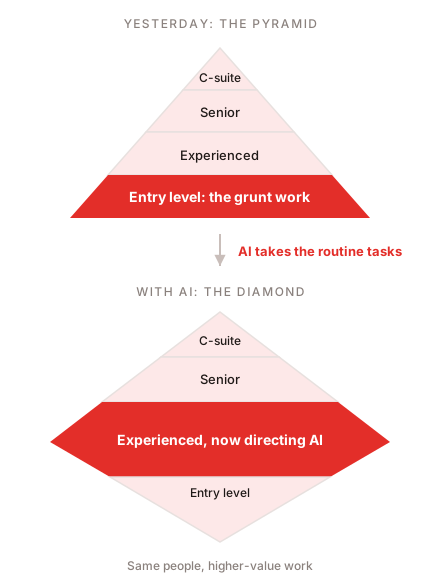
Most companies are shaped like a pyramid: a wide base of entry-level staff doing repetitive work, fewer experienced people above them, a handful of executives at the top. AI is good at exactly the work in that wide base, the data entry, the standard replies, the routine reports.
Crume argues the smart response is a reshuffle, so the pyramid becomes a diamond. The entry level shrinks. The middle swells, because one experienced person directing AI tools can now own work that used to need a small team.
IBM is backing this shape with money: it is tripling entry-level hiring in 2026, with job descriptions rewritten so juniors spend less time on routine coding and more time with customers [2].
You are the coal
Why more people rather than fewer? In 1865, economist William Jevons watched steam engines become more efficient while coal demand exploded instead of collapsing, because cheaper steam power got used everywhere. Crume's uncomfortable twist: in this analogy, you are the coal. When AI makes a task cheaper, businesses do more of it (more clients, more projects), and demand for people who can direct that work goes up. A clinic that automates its reminders does not send fewer messages. It starts recalling lapsed patients too, because following up finally costs nothing.
The Malaysian numbers
TalentCorp's national study expects more than 620,000 Malaysian jobs to be significantly impacted by AI, digitalisation, and the green economy within three to five years, around 18% of the workers it examined. Wholesale and retail trade tops the list at 245,000 jobs. The same study names 60 emerging roles, most of them in AI and digital work [3]. Impacted means rewritten, which is the pyramid turning into the diamond.
Will AI replace the jobs in my business?
You do not need IBM's budget to run the same play. Automate the repeated admin first: the enquiries typed into the CRM by hand, the WhatsApp questions that arrive over and over, the invoice chasing. Your receptionist stops answering question eighteen for the third time today and starts supervising the chatbot, handling the hard cases, and calling back the leads that matter. That is a promotion, and it costs a lot less than a new hire.
What to do with the hours you get back
The diamond only forms if the freed hours go somewhere deliberate. When automation returns ten hours a week to a receptionist, the lazy option is to let those hours dissolve into the day. The better option is to name their new use in advance: this person now owns follow-up calls to quiet leads, or reactivating patients who have not visited in six months, or checking the chatbot's conversations each morning and fixing the answers it fumbled.
That last task matters more than it sounds. Someone who spent three years answering your customers' questions is exactly the right person to supervise the AI now answering them, because they can hear when an answer is technically correct but wrong for your business. The job involves less typing and more judgment than it used to.
How to prepare your team
Tell them early, and let them point at the targets. The people doing the repetitive work know precisely which parts deserve automating, and they will name tasks you would never have guessed. Involving them turns the project from a threat into a relief, because nobody mourns the invoice-chasing spreadsheet.
Then train for the new shape of the work. Crume's four skills (flexibility, curiosity, creativity, critical thinking) [1] sound abstract until you translate them into daily habits: reading an AI draft before it goes out, noticing when a number looks off, asking whether the automated reply actually answered the customer's question. None of this needs a course. It needs a few weeks of doing the job alongside the tools, with permission to question what the machine produces.
The pace matters less than people fear. One task a month is a perfectly respectable speed: automate the appointment reminders in March, let the team settle, hand the routine WhatsApp questions to a chatbot in April, review what changed, then decide May's move together. A year of that rhythm reshapes the org chart more thoroughly than any big-bang transformation project, and nobody on the team experiences it as a threat, because they chose the targets.
The businesses that struggle with this shift will mostly be the ones that never started, still paying skilled people to copy data between screens while competitors answer enquiries in a minute. That is adoption without transformation, and moving one task at a time is enough to avoid it.
Not sure which of your tasks sit at the bottom of the pyramid? Get a free audit and we will map them.
Sources
- Crume, J., IBM Technology (2026). AI Gave You A Promotion: Why AI Isn't Replacing Jobs. youtube.com
- Fortune (2026). IBM is tripling the number of Gen Z entry-level jobs after finding the limits of AI adoption. fortune.com
- The Star (2025). AI, digitalisation and green tech to affect over 620,000 jobs in five years. thestar.com.my
FAQ
Will AI replace the jobs in my business?
It replaces tasks more than whole jobs. The repetitive work at the bottom of the org chart (data entry, standard replies, routine reports) is being automated, while demand grows for people who direct AI tools and handle customers. IBM is tripling entry-level hiring in 2026 even while it automates aggressively.
What is the pyramid to diamond shift?
Companies used to need a wide base of junior staff doing routine work, which made the org chart a pyramid. When AI absorbs that routine work, the shape becomes a diamond: a slimmer entry level and a much bigger middle of experienced people who supervise AI and own larger pieces of work.
Which skills matter most in the AI era?
IBM's Jeff Crume names four: flexibility, curiosity, creativity, and critical thinking. The pattern behind them is judgment. When AI handles the doing, the value moves to deciding what should be done and checking it was done well.
Keep reading
Vibe Coding vs. Agentic Engineering: The Difference Your Business Should Care About
Vibe coding gets you a demo by Friday. Agentic engineering gets you software you can run a business on. How to tell which one you're paying for.
From AI Adoption to AI Transformation: Why Your Business Hasn't Changed Yet
Most businesses have adopted AI tools. Few have profit to show for it. The difference between AI adoption and AI transformation, and how to cross the gap.
How Large Language Models Work, Under the Hood (No Math Required)
A large language model predicts the next word, trillions of times. That one trick explains what AI is brilliant at and why it invents your prices.
Stay Ahead of the AI Curve
Weekly insights on AI trends, automation tips, and real-world case studies.